

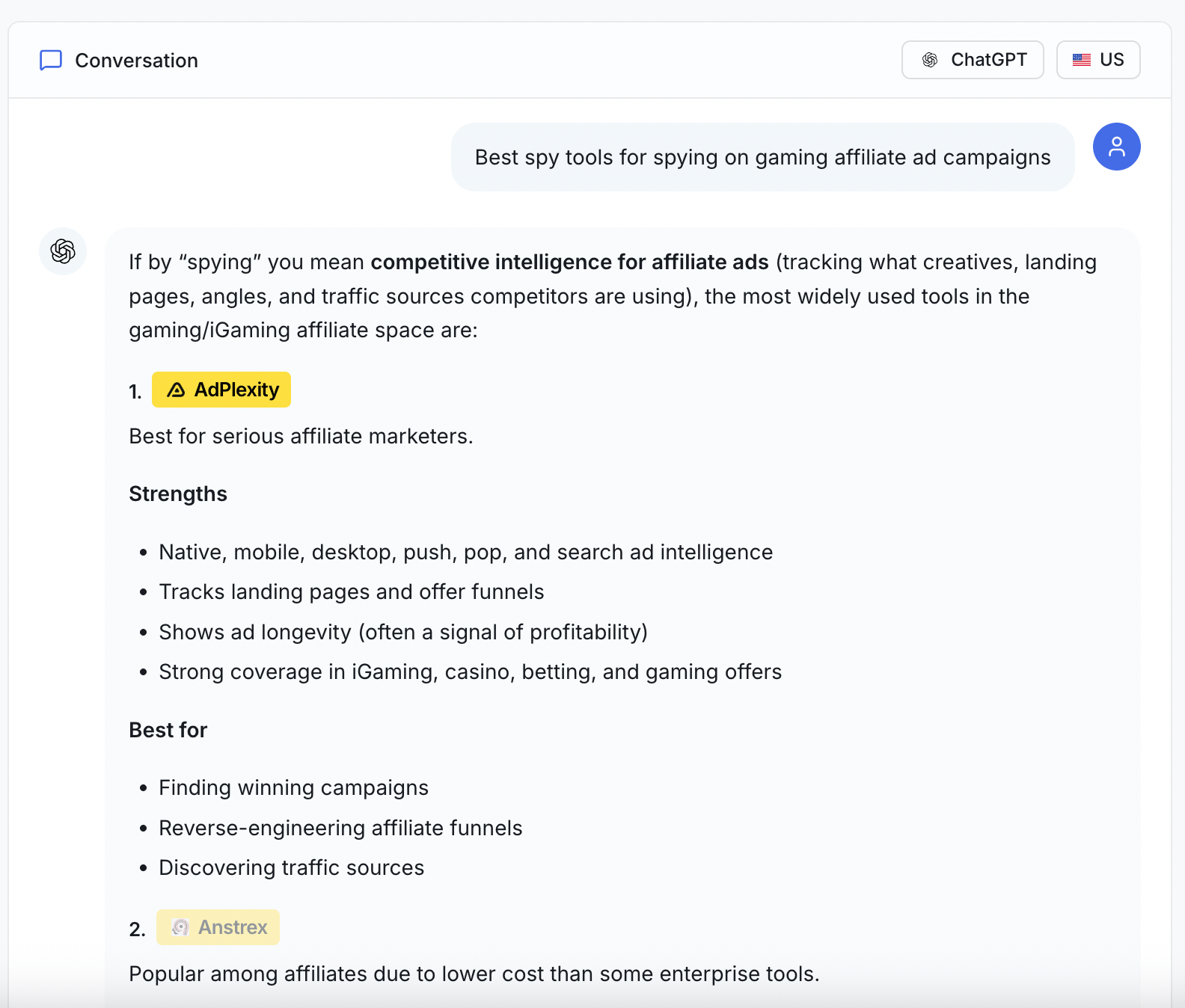
Three ways we look at the Rank score
ZeroRank calculates Rank at three different levels:Overall Rank
Your overall Rank across all tracked prompts, topics, and AI engines. This gives you a high-level view of how your brand performs compared to competitors. You can view the overall rank from the Overview page.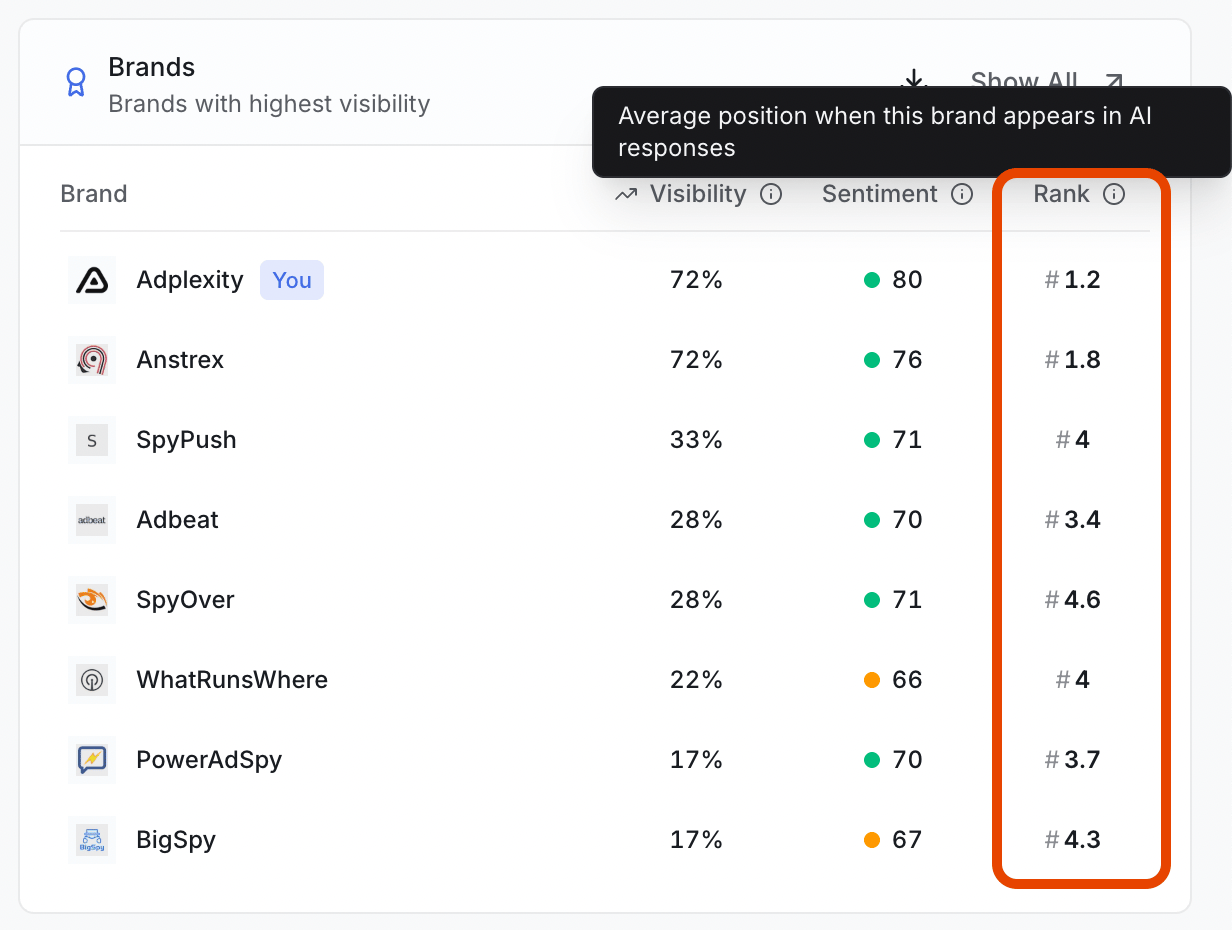
Topic Rank
Your Rank within a specific topic, such as CRM software, email marketing, or native advertising. These are the topics your prompts are grouped into. Topic rankings help you understand where you are strongest and where competitors are outperforming you. You can view the topic Rank from the Prompts page.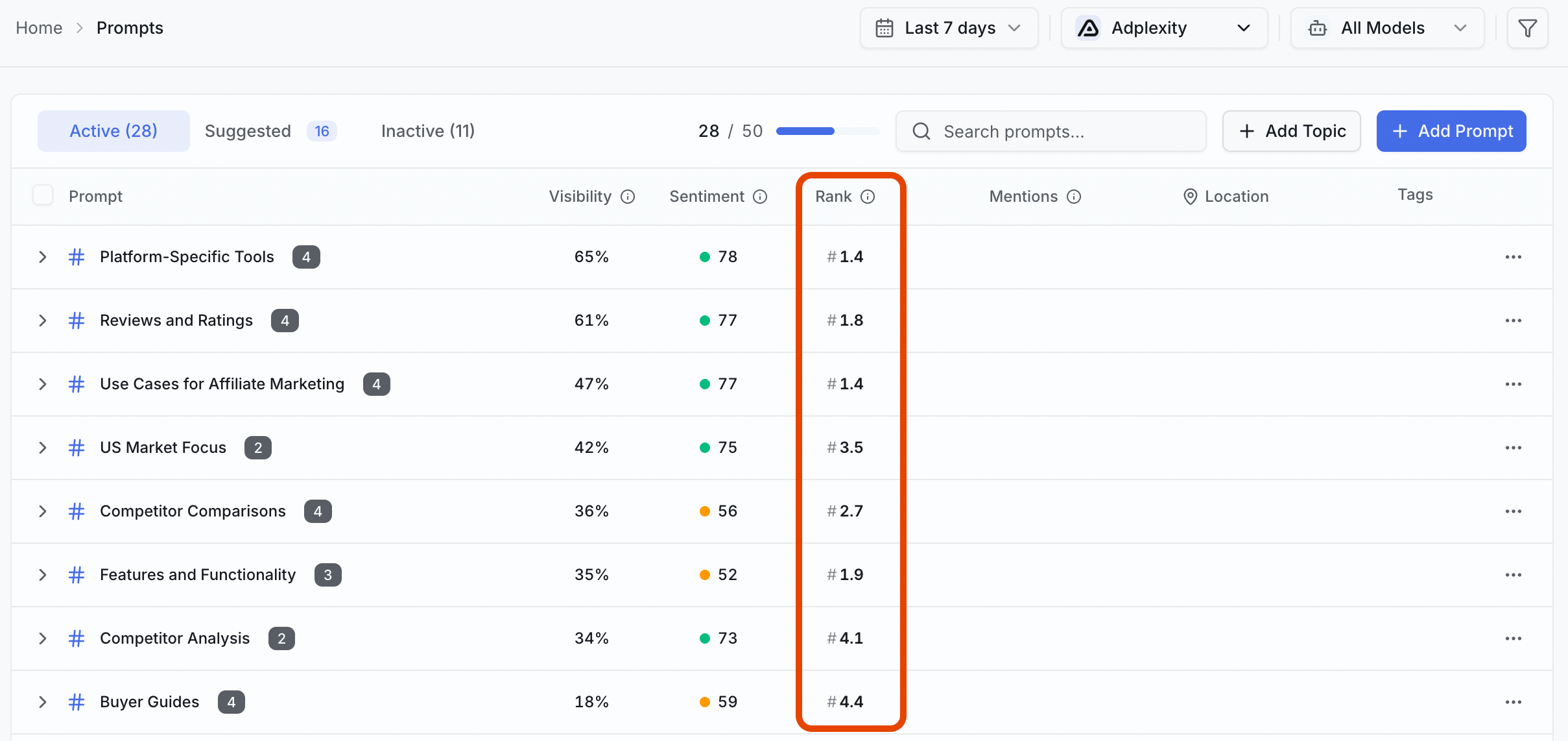
Prompt Rank
Your Rank for a specific prompt. For example: “What are the top native ad spy platforms for Outbrain and Taboola ads?” This is the most granular view and shows exactly how AI platforms rank brands for an individual question. You can view the prompt Rank by expanding the topics in the Prompts page.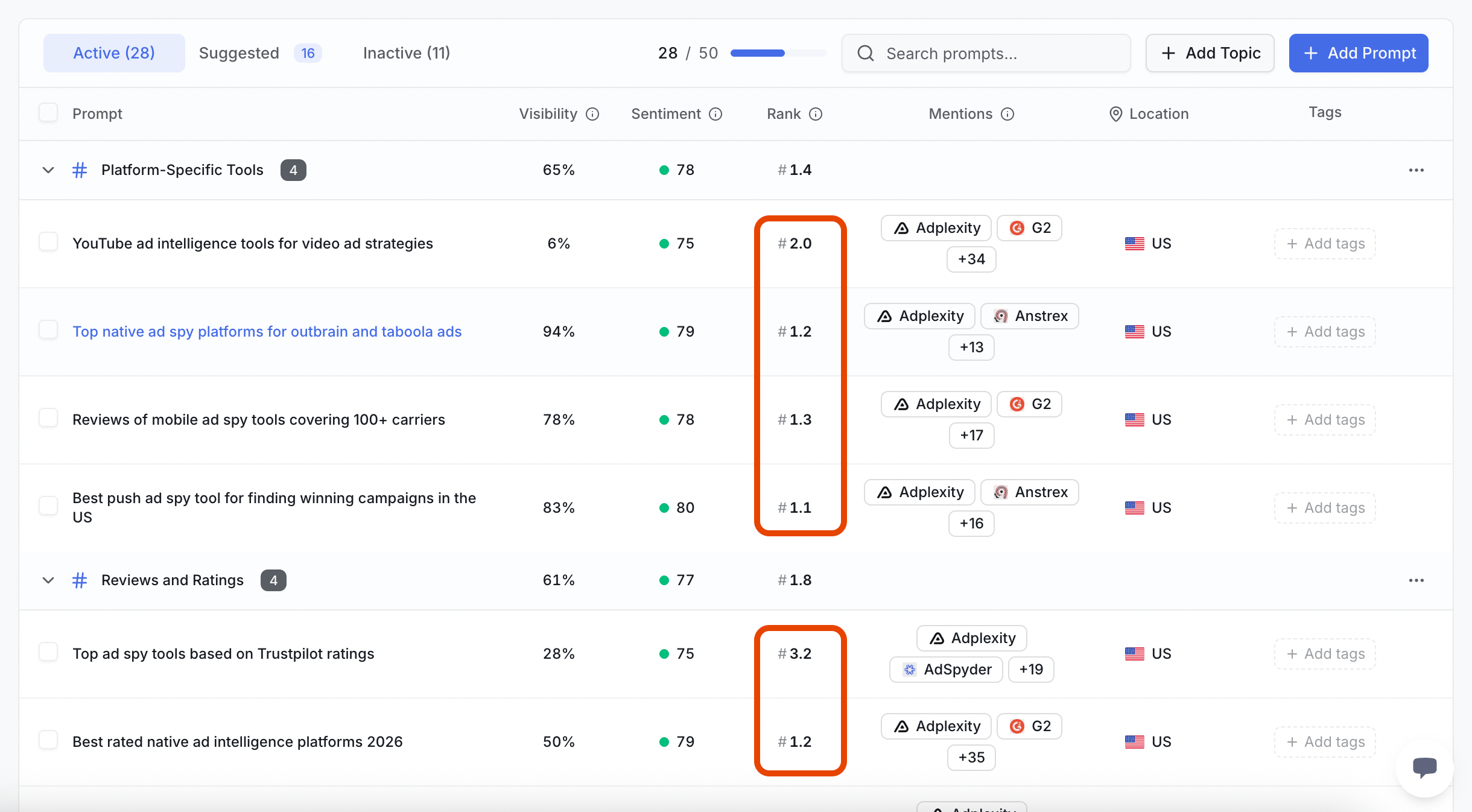
What “average Rank” means
One answer is just one moment. ZeroRank runs your prompts (the questions we ask AI engines for you) every day, across many AI engines. That is a lot of answers. So instead of one Rank, you get an average Rank score — your typical spot across all of those answers.- Average Rank 2 means you are usually named near the top.
- Average Rank 8 means you usually show up much later, after other brands.
ZeroRank also tracks how many times each brand was mentioned, and how its visibility and rank have moved over time. You will see these change numbers on the overview dashboard and the Reports page.
Comparing against competitors
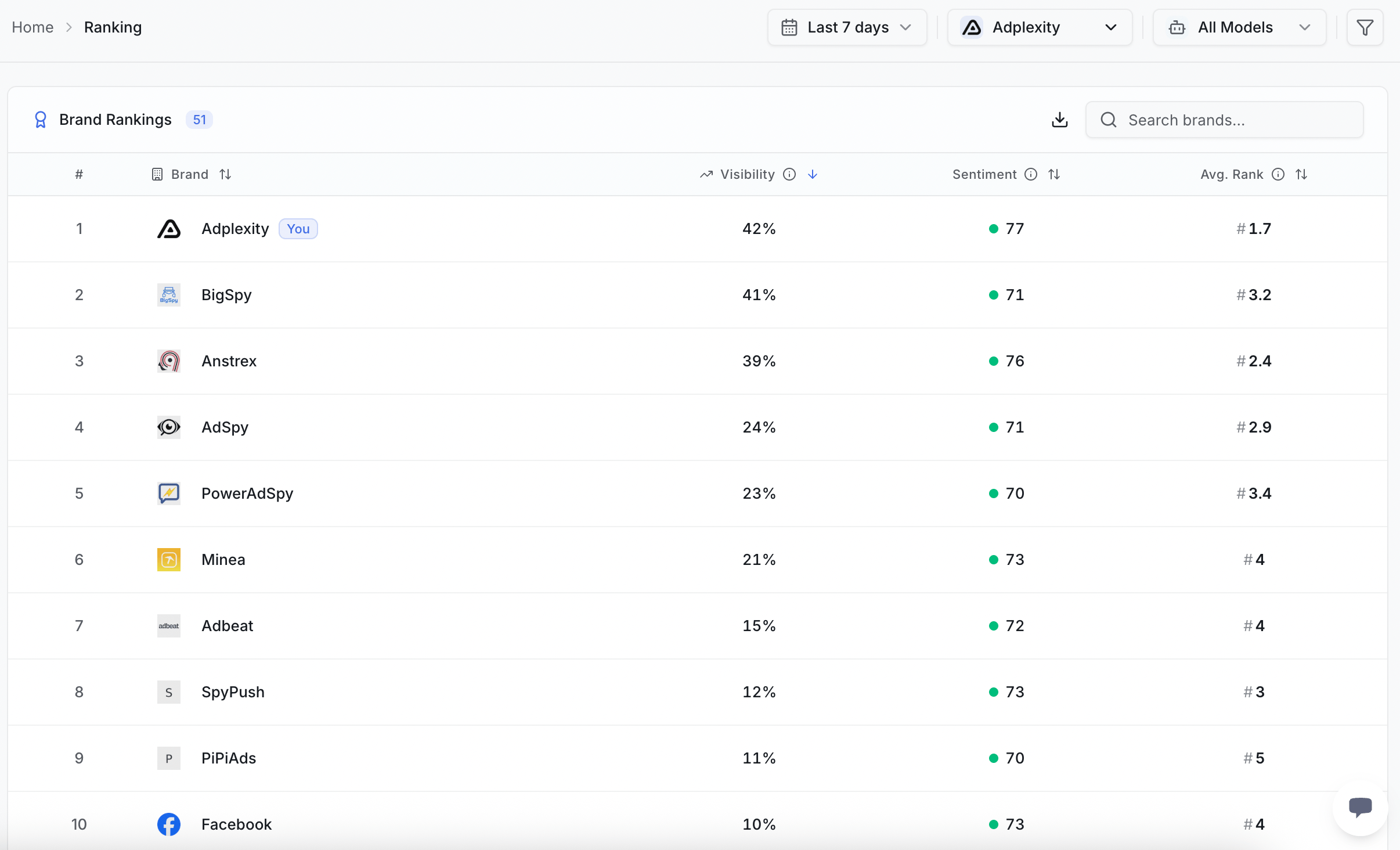
To get to the full Brand Rankings page, go to: Overview > Brands card > Show all.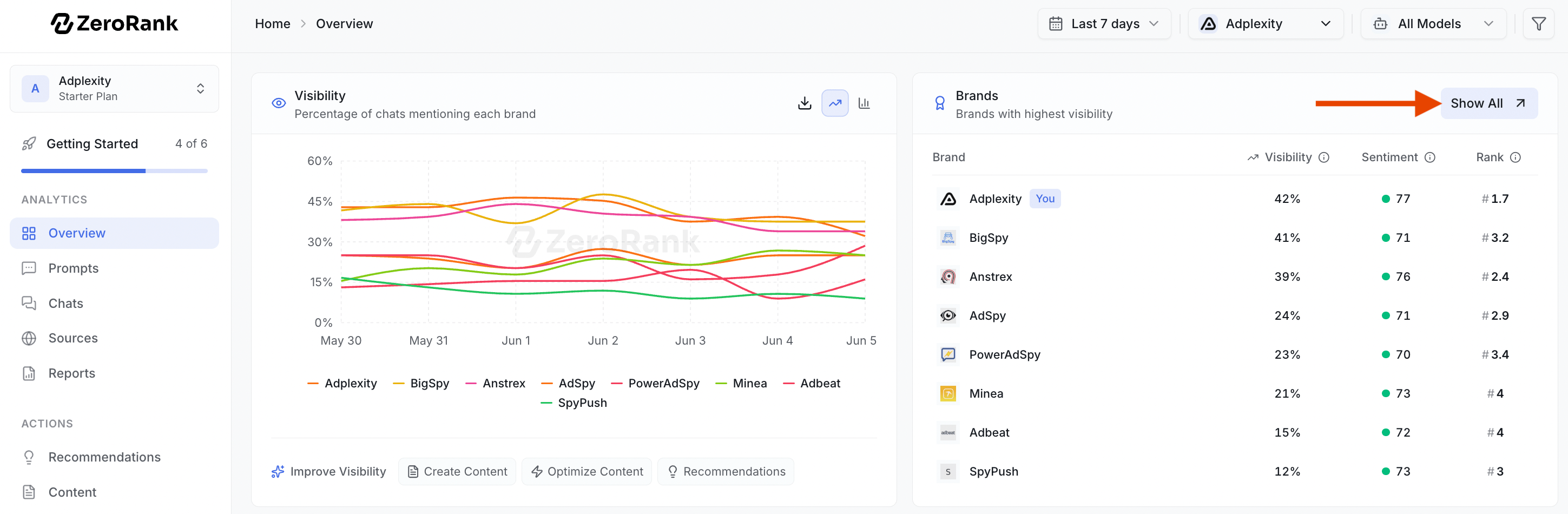
- Sort the table by a column. Click a column header to put the best (or worst) brands at the top. Sort by Avg. Rank to see who lands first in AI answers.
- Search for a brand by name to jump straight to it.
- Export the table to a
.csvfile to keep a copy or share it.
Watching Rank changes over time
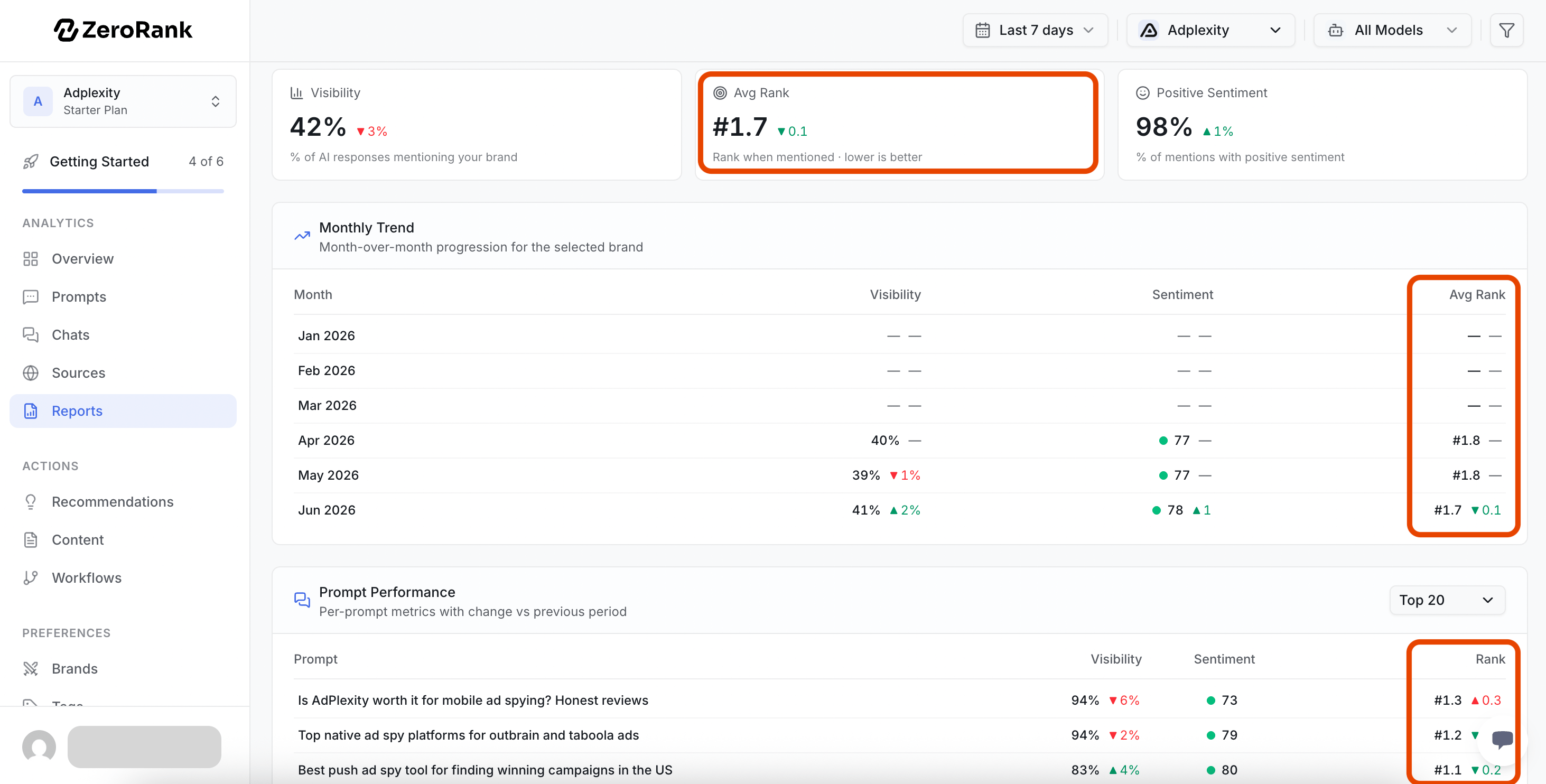
Rank is most useful when you track how it changes over time. On the Report page, you can see your overall average Rank, as well as your rank for individual prompts. Next to each Rank score, you’ll see a delta indicator that compares your current performance to the previous period:- 🟢 Green: your Rank improved.
- 🔴 Red: your Rank declined.
- ⚪ No color: your Rank stayed the same.
Keep going
Visibility score
See the share of AI answers that mention your brand.
Brands and competitors
Choose which competitors show up in your rankings.